

The New Reality of Enterprise Security in 2026
The enterprise security perimeter has dissolved. Gone are the days when firewalls and network boundaries could define security architecture. In 2026, the average enterprise operates across five cloud providers, manages over 200 SaaS applications, deploys microservices that scale elastically, and integrates AI models that process sensitive data in real-time. Security must now operate at cloud speed, adapt to ephemeral infrastructure, and protect assets that exist across distributed, borderless environments.
For CXOs, this transformation presents both risk and opportunity. The risk is clear: attack surfaces have expanded exponentially, vulnerabilities proliferate faster than security teams can address them, and regulatory requirements grow more stringent. The opportunity lies in embracing security platforms that match the architecture and velocity of modern enterprise technology—tools that provide unified visibility, automated response, continuous validation, and intelligence-driven prioritization.
This article profiles ten companies that represent the leading edge of system security innovation. These companies are not incremental improvements on legacy tools; they are fundamentally rethinking how security operates in cloud-native, DevOps-driven, AI-powered enterprises. For technology leaders navigating 2026, understanding these platforms is essential to building resilient, scalable, and business-enabling security architectures.
Why System Security Must Evolve Beyond the Perimeter
Traditional security models assumed static infrastructure, centralized control, and clear boundaries between inside and outside. Those assumptions no longer hold. Modern enterprises deploy infrastructure as code, spin up environments in minutes, grant third-party integrations broad access to data, and empower development teams to ship code continuously. Security that relies on manual processes, periodic assessments, or perimeter-based controls cannot keep pace.
The challenges facing CXOs today include:
Asset Visibility and Attack Surface Discovery: Most organizations lack complete visibility into their cloud assets, identity configurations, SaaS integrations, container deployments, and data flows. Without comprehensive asset inventory, security teams cannot identify exposure, prioritize risk, or enforce policies consistently.
Speed and Automation: DevOps teams deploy hundreds of times per day. Security must integrate seamlessly into CI/CD pipelines, provide real-time feedback, and automate remediation without slowing development velocity. Manual security reviews and static scanning tools introduce bottlenecks that impede business agility.
Context and Prioritization: Traditional vulnerability scanners generate thousands of alerts, most of which are not exploitable in production environments. Security teams need tools that understand runtime context, map dependencies, and prioritize threats based on actual risk—not theoretical CVE scores.
Cloud-Native Incident Response: When incidents occur in containerized, serverless, or multi-cloud environments, forensic investigation requires new capabilities. Evidence is ephemeral, workloads are distributed, and traditional disk-imaging approaches fail. Organizations need cloud-first forensics and automated incident response workflows.
Compliance at Scale: Regulatory frameworks like SOC 2, ISO 27001, GDPR, and HIPAA demand continuous monitoring, audit trails, and evidence collection. Manual compliance processes do not scale. Enterprises need platforms that automate governance, generate audit-ready reports, and provide real-time posture visibility.
The companies profiled below address these challenges directly. They represent a new generation of security tooling designed for the realities of 2026: distributed infrastructure, continuous deployment, identity-centric access, and intelligence-driven operations.
Top 10 System Security Companies CXOs Should Follow in 2026
1. Pangea

Image credit: siliconangle.com
Pangea delivers Security Platform as a Service, offering API-first security building blocks that developers can embed directly into applications. Their modular platform includes secure audit logs, secrets management, file scanning, data redaction, and AI guardrails—enabling organizations to integrate security controls at the application layer rather than bolting them on after deployment.
Why It Matters in 2026: As generative AI tools, chatbots, and AI-powered workflows proliferate, organizations face new threats: prompt injection attacks, data leakage through model outputs, and compliance risks from unauditable AI interactions. Pangea addresses this with AI-powered threat detection and response capabilities designed specifically for securing AI workloads. Their builder-friendly model enables security teams to enforce controls without requiring deep security expertise from developers.
Strategic Context: Pangea raised a $26 million Series B led by GV and Okta Ventures, reflecting strong market validation for their API-first security approach. For CXOs building cloud-native applications, Pangea provides a pragmatic path to embedding security into every phase of development and deployment—shifting security left without introducing friction.
2. Lightspin

Image credit: calcalistech.com
Lightspin provides cloud security posture management that automatically scans IaaS, Kubernetes, containers, and identity configurations to identify vulnerabilities, misconfigurations, and potential attack paths. The platform prioritizes remediation based on exploitability and business impact, helping security teams focus on risks that matter.
Why It Matters in 2026: Cloud misconfigurations remain one of the leading causes of data breaches. Lightspin maps complex cloud relationships—identity permissions, network policies, workload configurations—and surfaces exploitable attack paths that traditional scanners miss. This context-driven approach reduces alert fatigue and enables faster, more effective remediation.
Strategic Context: Lightspin was acquired by Cisco, validating its technology and market position. Despite the acquisition, Lightspin continues to operate as a standalone product line, offering enterprises a compelling CNAPP alternative with strong risk prioritization and cloud-native architecture. For multi-cloud organizations, Lightspin provides unified visibility and control across AWS, Azure, and GCP.
3. JupiterOne

Image credit: prnewswire.com
JupiterOne offers Cyber Asset Attack Surface Management, centralizing data from cloud providers, identity systems, SaaS applications, infrastructure tools, and configuration management platforms into a unified graph-based knowledge base. This enables comprehensive asset visibility, relationship mapping, continuous monitoring, and risk prioritization across the entire technology estate.
Why It Matters in 2026: As enterprises scale cloud adoption, SaaS proliferation, and hybrid infrastructure, asset visibility becomes the foundational challenge. JupiterOne solves this by ingesting data from hundreds of sources and presenting it as a queryable graph—enabling security teams to ask questions like "which publicly exposed assets have admin access to production databases?" and receive instant answers.
Strategic Context: JupiterOne closed a $70 million Series C in 2022, achieving unicorn valuation and raising total funding to over $119 million. Leading analysts recognize JupiterOne as a sample vendor in the CAASM category. For organizations managing complex, distributed environments, JupiterOne provides the visibility layer that enables every downstream security control—vulnerability management, compliance monitoring, incident investigation, and threat hunting.
4. Rezilion

Image credit: channelvisionmag.com
Rezilion delivers DevOps-native cloud workload protection and vulnerability prioritization. The platform generates live Software Bills of Materials, maps dependencies, and identifies which vulnerabilities are actually exploitable at runtime—dramatically reducing noise from static scans and focusing remediation efforts on real risk.
Why It Matters in 2026: Traditional vulnerability scanners flag every CVE in every package, generating overwhelming alert volumes that security teams cannot address. Rezilion takes a runtime-aware approach: it analyzes whether vulnerable code is loaded in memory, whether it is reachable via application logic, and whether it presents actual exploitability. This reduces vulnerability backlogs by 70-90% and enables security teams to focus on threats that matter.
Strategic Context: Rezilion aligns with modern DevSecOps practices—security that adapts to rapid change, integrates directly into CI/CD workflows, and scales with development velocity. For CXOs balancing speed and risk, Rezilion provides a solution that does not force trade-offs: teams can ship faster while reducing exposure.
5. Chainguard
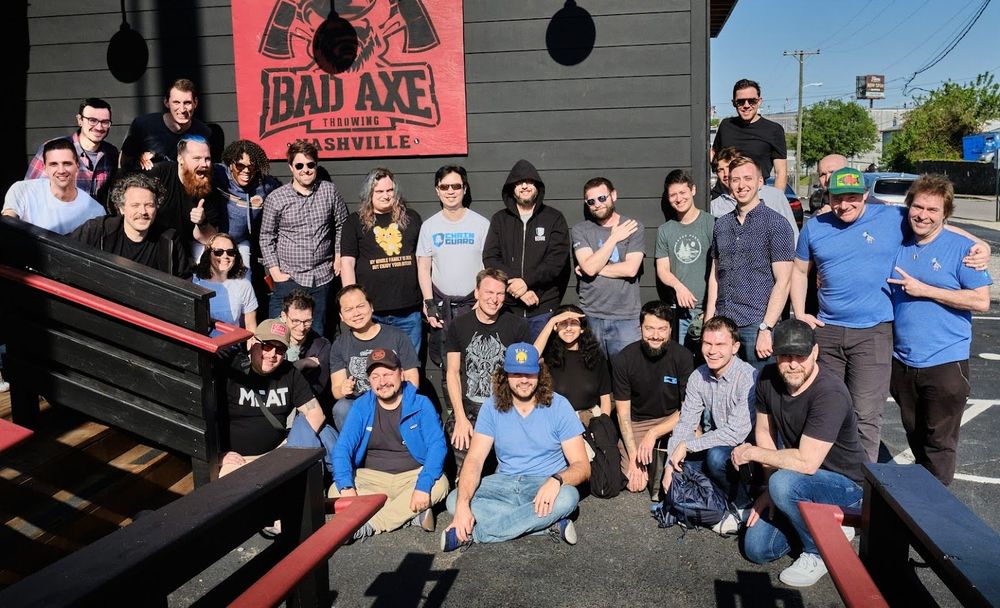
Image credit: geekwire.com
Chainguard focuses on supply chain and software image security for modern systems. The company provides secure container images, enforceable build policies, and strong assurance for cloud-native workloads—including emerging AI and machine learning deployments.
Why It Matters in 2026: Software supply chain attacks have become one of the most significant threats facing enterprises. Compromised dependencies, malicious container images, and insecure build pipelines can introduce vulnerabilities that bypass traditional defenses. Chainguard addresses this by offering hardened, minimal container images with verifiable provenance and continuous security updates.
Strategic Context: Chainguard has rapidly become a market leader in container image security, raising significant late-stage capital to expand into AI workload protection. For organizations deploying containerized applications, microservices, and AI models, Chainguard provides the supply chain integrity that prevents attacks before they reach production.
6. Cado Security
Image credit: techcompanynews.com
Cado Security offers a cloud-native Digital Forensics and Incident Response platform that automates data collection, memory and disk capture, log aggregation, evidence preservation, and rapid incident investigation across containers, serverless environments, and multi-cloud infrastructures.
Why It Matters in 2026: Traditional forensic tools assume static infrastructure and disk-based analysis. In cloud environments, workloads are ephemeral, evidence disappears when instances terminate, and investigations must span multiple cloud providers and container orchestrators. Cado automates forensic data collection at cloud scale, enabling security teams to investigate incidents quickly and preserve evidence before it vanishes.
Strategic Context: Cado raised $20 million in 2023, bringing total funding to over $31 million. The company is gaining recognition as a leader in cloud-first forensics and incident response. For CXOs, Cado ensures readiness and resilience in post-incident scenarios—often a weak spot in modern cloud architectures where response playbooks assume on-premise infrastructure.
7. Hunters

Image credit: usvp.com
Hunters provides an AI-driven SOC platform and next-generation SIEM that combines log ingestion, automated detection, enrichment, alert triage, and integrated threat-hunting workflows. The platform uses AI to reduce analyst workload and accelerate detection and response.
Why It Matters in 2026: Security Operations Centers face mounting pressure: alert volumes increase, threat sophistication rises, and analyst burnout remains a persistent challenge. Hunters addresses this by automating repetitive tasks—alert triage, enrichment, correlation, investigation—enabling leaner SOC teams to achieve better outcomes. The platform's AI-driven approach reduces mean time to detect and respond while lowering operational costs.
Strategic Context: As enterprises adopt cloud and SaaS architectures, traditional SIEMs struggle with scale, cost, and complexity. Hunters offers a modern alternative designed for cloud-native environments, providing scalable detection and response without proportionally increasing headcount. For CXOs managing constrained security budgets, Hunters represents a path to doing more with less.
8. Cymulate
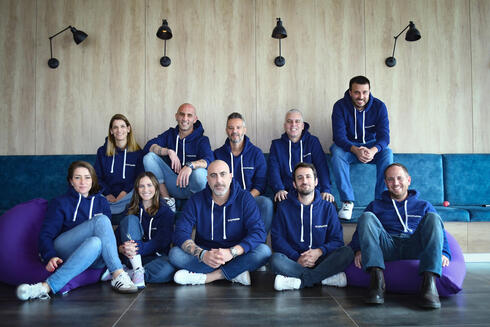
Image credit: calcalistech.com
Cymulate delivers Breach and Attack Simulation and continuous security validation. The platform repeatedly simulates attacker techniques—phishing campaigns, lateral movement, ransomware deployment, misconfigurations—tests existing controls, and measures real-world resilience while providing actionable remediation guidance and risk metrics.
Why It Matters in 2026: Compliance checklists and point-in-time security assessments provide false confidence. Cymulate enables continuous validation: organizations can test whether their defenses actually work against current attack techniques. This provides leadership with measurable security KPIs, identifies gaps before attackers exploit them, and enables data-driven investment decisions.
Strategic Context: Cymulate transforms security from a compliance exercise into an engineering discipline. By continuously validating controls, organizations shift from hoping their defenses work to knowing they work. For CXOs accountable to boards and regulators, Cymulate provides the evidence and metrics needed to demonstrate security effectiveness.
9. Vanta

Image credit: businesswire.com
Vanta provides compliance and security-posture automation, continuously monitoring cloud environments, identity systems, logs, and configurations to generate audit-ready evidence for frameworks including SOC 2, ISO 27001, GDPR, and HIPAA.
Why It Matters in 2026: Regulatory and third-party compliance demands continue to grow, yet manual audit processes remain time-consuming, error-prone, and resource-intensive. Vanta automates evidence collection, monitors configurations continuously, and maintains audit trails—enabling fast-growing companies to achieve and maintain compliance without building large compliance teams.
Strategic Context: Vanta has achieved significant funding and strong customer adoption, becoming the leading compliance automation platform for modern enterprises. For CXOs managing growth, Vanta reduces the friction of achieving certifications, supports customer trust requirements, and enables scalable governance without heavy administrative overhead.
10. DoControl
Image credit: prnewswire.com
DoControl delivers SaaS Security Posture Management and data governance, providing visibility and automated policy enforcement for SaaS applications, identity access, data sharing, insider risk, and data loss prevention across cloud-based SaaS environments.
Why It Matters in 2026: The average enterprise uses over 200 SaaS applications, granting third-party integrations access to sensitive data, enabling employees to share files externally, and creating identity sprawl that traditional security tools cannot monitor. DoControl provides a control plane over SaaS risk—monitoring identity permissions, detecting data exposure, and enforcing governance policies across the SaaS estate.
Strategic Context: As enterprises proliferate SaaS usage and manage sensitive data across multiple cloud apps, DoControl closes gaps that traditional network-based security tooling misses. For CXOs in SaaS-heavy organizations, DoControl provides the visibility and control needed to manage risk without constraining productivity.
Strategic Themes Across These Companies
Several patterns emerge from this cohort of security innovators:
Cloud-Native by Design: Every platform on this list was built for cloud, SaaS, and distributed infrastructure. They do not retrofit legacy architectures; they start with modern infrastructure assumptions. This matters because retrofitted tools introduce friction, fail to scale, and miss cloud-specific risks.
API-First and Developer-Friendly: Platforms like Pangea, Rezilion, and Chainguard integrate directly into CI/CD pipelines and development workflows. Security becomes part of the build process, not a separate review stage. This enables continuous security without slowing deployment velocity.
Intelligence-Driven Prioritization: Lightspin, Rezilion, JupiterOne, and Hunters all emphasize context and prioritization. They reduce noise, focus teams on exploitable risks, and provide actionable intelligence—moving security from reactive alert response to proactive risk management.
Automation and Continuous Validation: Cymulate, Vanta, and DoControl automate processes that traditionally required manual effort: security validation, compliance monitoring, and SaaS governance. Automation enables security to scale with business growth without proportional headcount increases.
Incident Readiness and Response: Cado Security and Hunters address the reality that prevention alone is insufficient. Organizations need forensic capabilities, automated investigation workflows, and scalable SOC operations to respond effectively when incidents occur.
These themes reflect broader shifts in enterprise security strategy: moving from perimeter defense to identity and asset-centric models, from manual processes to automated workflows, from theoretical compliance to measurable validation, and from siloed tools to integrated platforms.
Strategic Recommendations for CXOs
1. Establish Unified Visibility as the Foundation
Before implementing advanced security controls, establish comprehensive asset visibility. Deploy Cyber Asset Attack Surface Management platforms like JupiterOne or SaaS governance tools like DoControl to create a unified inventory of cloud resources, identity permissions, SaaS applications, and data flows. Visibility is the prerequisite for every downstream security capability—vulnerability management, compliance monitoring, incident response, and threat hunting. Without knowing what assets you have, where they are, and how they are configured, you cannot effectively protect them.
2. Integrate Security into Development Workflows
Security that requires separate review processes, manual gates, or post-deployment scanning introduces bottlenecks that slow business velocity. Adopt API-first platforms like Pangea, Rezilion, and Chainguard that integrate directly into CI/CD pipelines, provide real-time feedback to developers, and enforce security policies without disrupting deployment speed. This shifts security left—catching issues before production—while enabling continuous delivery.
3. Prioritize Exploitability Over Vulnerability Counts
Traditional scanners generate thousands of alerts, overwhelming security teams and creating backlogs that never get resolved. Deploy tools like Rezilion and Lightspin that understand runtime context, map dependencies, and prioritize vulnerabilities based on actual exploitability. This reduces alert fatigue, focuses remediation efforts on real risk, and enables security teams to operate more effectively with constrained resources.
4. Build Resilience Through Continuous Validation
Compliance frameworks and security checklists provide baseline controls, but they do not prove that defenses actually work. Use breach and attack simulation platforms like Cymulate to continuously test security controls against current attack techniques. This transforms security from a theoretical exercise into measurable engineering discipline, provides leadership with evidence-based risk metrics, and identifies gaps before attackers exploit them.
5. Secure the Full Attack Lifecycle
Effective security requires coverage across prevention, detection, and response. Combine preventative controls—supply chain security from Chainguard, posture management from Lightspin, SaaS governance from DoControl—with reactive capabilities like cloud forensics from Cado Security and AI-driven SOC operations from Hunters. This layered approach ensures readiness across the entire attack chain, from pre-deployment hardening to post-incident investigation.
6. Automate Compliance and Governance at Scale
Manual compliance processes do not scale with business growth. Deploy platforms like Vanta to automate evidence collection, continuous monitoring, and audit workflows for SOC 2, ISO 27001, GDPR, HIPAA, and other frameworks. Automation reduces the friction of achieving certifications, supports customer trust requirements, and enables repeatable governance without building large compliance teams.
7. Address the SaaS and Third-Party Risk Gap
SaaS applications, third-party integrations, and external data sharing represent one of the largest and fastest-growing attack surfaces for enterprises. Traditional network security tools provide limited visibility into SaaS environments. Deploy SaaS Security Posture Management platforms like DoControl to monitor identity permissions, detect data exposure, enforce governance policies, and manage insider risk across the SaaS estate.
Closing Executive Takeaway
The companies profiled in this article represent more than incremental improvements on legacy security tools. They reflect a fundamental rethinking of how security operates in modern enterprises: distributed, automated, intelligence-driven, and integrated into business workflows rather than bolted on afterward.
For CXOs navigating 2026, the strategic imperative is clear. Security can no longer be a compliance checkbox or a cost center that slows innovation. It must become a business enabler—providing the visibility, automation, and resilience that allow organizations to move faster while managing risk effectively. The platforms above demonstrate what that future looks like: security that scales with cloud infrastructure, adapts to development velocity, provides measurable validation, and protects assets wherever they exist.
Organizations that adopt these approaches will achieve competitive advantage. They will deploy new capabilities faster, respond to incidents more effectively, meet regulatory requirements more efficiently, and build trust with customers and partners. Those that continue relying on legacy models—perimeter-focused, manual, reactive—will face mounting risk, escalating costs, and diminishing agility.
The question for technology leaders is not whether to modernize security architecture, but how quickly to do so. The companies profiled here provide proven paths forward. Understanding their capabilities, adopting their approaches, and integrating their platforms into enterprise security strategy will define which organizations thrive in the cloud-native, AI-powered, continuously evolving landscape of 2026 and beyond.